

Fellows in Focus: Jamie Peck
In our new series "Fellows in Focus", we feature research conducted by current fellows of the Collegium. What are they working on while in residence and what are they hoping to achieve? And what is coming next? The fellows will also give glimpses of what being a fellow at SCAS is really like.
Hello Jamie Peck,
What are you working on during your time in residence, and why now?
During my time at SCAS, I am continuing my work on the distinctive, “interventionist” methodological practice that is known as conjunctural analysis, a social-scientific means to “historicize the present” that is particularly associated with moments of crisis, turbulence or disorder. Conjunctural analysis has been described as the cultural theorist Stuart Hall’s “demanding gift” to the critical social sciences, which in truth amounts to a disposition, ethos, and emergent field of practice, more than it does an easily reproducible “method.” Nevertheless, it overflows with methodological implications, some of which I will be focusing on during my time at SCAS: first, I am in the early stages of a collaborative project to develop a critical geography of economic ideas, in dialogue with well-established fields like the history economic thought and the history of science; and second, I am working on conjunctural approaches to comparison, space, and geographical scale.
What are you hoping to achieve?
Probably more than is realistic! But certainly some concrete things. I have just signed a book contract to work on an edited collection, Mapping economic ideas, with my UBC colleague Trevor Barnes, together with a large, interdisciplinary group of contributors. The heavy lifting on this will be done during my time at SCAS. I will also be taking advantage of being in Sweden, and in Europe more generally, to initiate some new conversations around the scope and practice of conjunctural analysis, including the groundwork for a new project centered on the political and economic transformation of Athens in what appears to be both a stressed and an actively reordering world system.
How does your current research relate to your previous work?
I work in a field, human geography, in which vernacular forms of conjunctural analysis have long had a certain presence, albeit with rather less reflexive deliberation than elsewhere. In the past few years, however, lively debates around different approaches to conjunctural analysis have taken off, at least partly due to the disorienting times in which we are living. So even though this has been an explicit theme in my work for more than a decade, there is a new sense of urgency and even timeliness. And with respect to the movement and mutation of ideas, especially economic ideas, I have long been interested in the mobilization and mutation of neoliberal forms of statecraft, which also seem to be acquiring a different kind of relevance, as evidence of the dissipation and degradation of the neoliberal project continues to mount, along with confusing signals about what might be coming next.
What’s next? What research do you envision for the future?
Economic geographers like me tend to work in the “restructuring present,” so what we do next is partly a function of the ways in which grounded circumstances and worldviews are themselves changing. This said, I like to think that there are some programmatic aspects to what I do, which to some extent are coming together when it comes to these intersecting concerns with the conjunctural and the ideational. Times of crisis and dislocation, it is often said, are when “new” ideas really matter. It feels like we are in one of those historical moments right now. It is worth remembering what Milton Friedman once said, in the early years of what we would later call the neoliberal era: “Only a crisis—actual or perceived—produces real change. When … the actions that are taken depend on the ideas that are lying around.” Ideas are never just lying around, of course; they have to be picked up and put to work in particular ways.
SCAS hosts Fellows from around the world and from a wide range of disciplines – in what way, if any, has this international inter-/multidisciplinary environment influenced you so far?
Geographers tend to live, “at home,” in an interdisciplinary environment, in a field that spans the natural and social sciences as well as the humanities. And SCAS is a bit like that, but on steroids. In addition to the intrinsic value associated with the wide spectrum of interests, perspectives, and expertise at encountered SCAS, this unique environment is also a prompt for all of us to think about what we are doing in new ways, and from different angles. This can go from fairly basic things (like how we communicate what we are doing, beyond the usual disciplinary or local silos), to more fundamental questions why we are doing what we are doing, and to what ends.
What’s the most unexpected benefit/s of being a Fellow at SCAS?
I had heard from friends and colleagues over the years that this was a special place, but just how unique it is has nevertheless come as something of a surprise. I knew that I would enjoy the space to think, away from some of the usual traffic. But this is a really quite special place to do that, not just as a result of the salubrious physical environment (although there is that), but because of the care and commitment that clearly goes into its maintenance. And not least, until I came to Sweden, I had no idea that I actually needed fika once or twice a day, or even what that was. Being introduced to this practice has been life-changing in its own way.
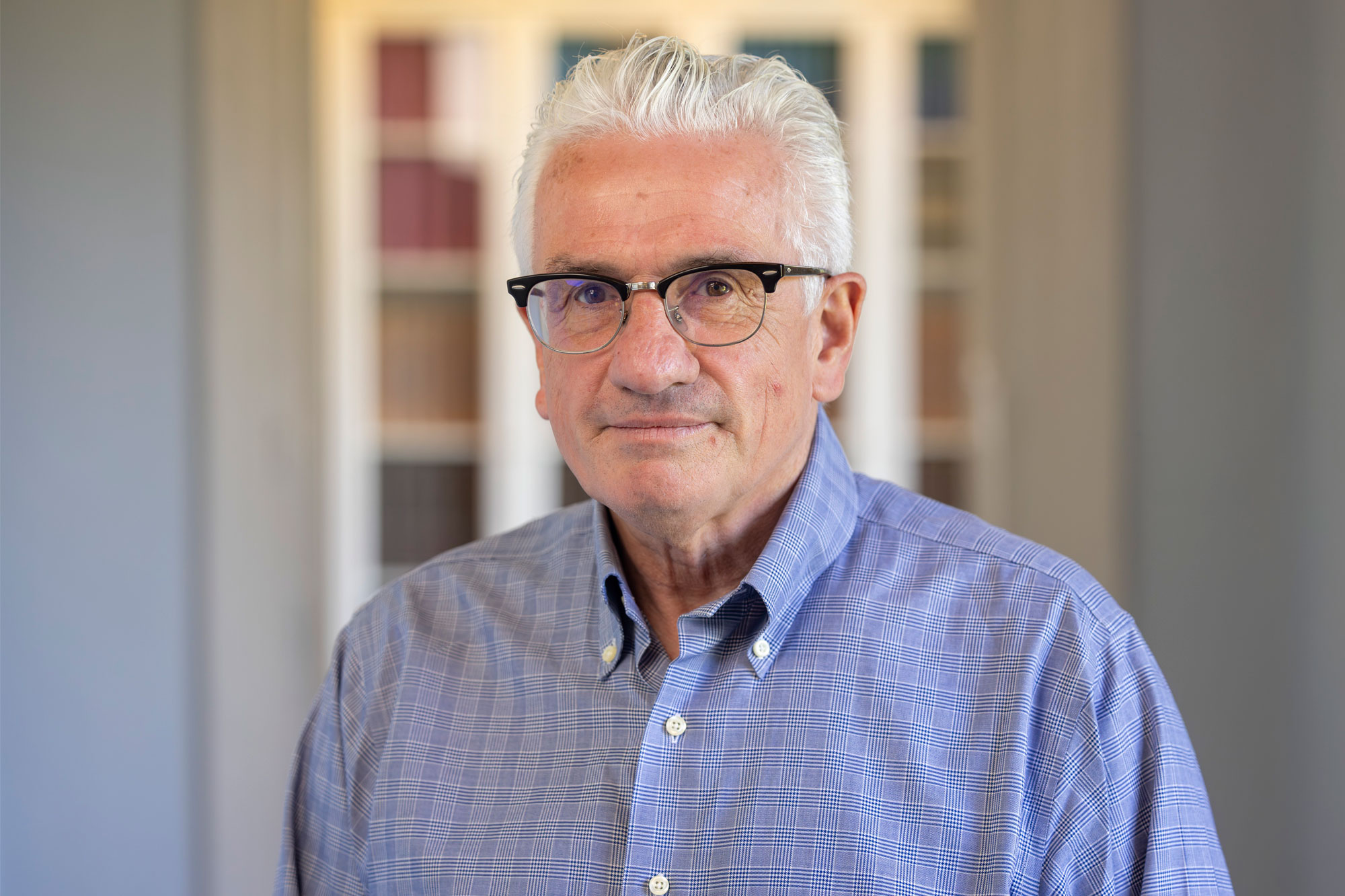
Jamie Peck is Professor of Geography at the University of British Columbia in Vancouver. He is in residence at SCAS in the academic year 2026-27.